Colored Pencil and Oil Pastels
- Sep 28, 2025
- 3 min read
Process and product
Learning about the application of charcoal and graphite, I tried to look for ways that I can apply the same technique to this piece right here, with rubbing, erasing, blowing on the piece. Additionally, I also picked a very limited color range, of just teal and red, then apply them onto a black paper, with the hope that it would bring out the hue much clearer and better than white paper; it did not disappoint. I used oil pastels for the bigger area of color, then mixing them by slightly brushing over them with a dry brush. When I tried to apply a little bit of water to it, the color seem to desaturate a lot, as you can clearly see in the underbelly section of the deer. Lastly, for clearer definition of certain area like the leg, the horns, I used colored pencils to go over them once more.

Technical and safety information about tools and materials
Though these materials are quite safe, certain pigments that they have might not be, such as chrome yellow. For pastels and crayons, a good ventilation system is recommended, but for most preK-12 schools, that should not be an issue at all. Colored pencil and markers should definitely be safe, however, precautions will still be needed for younger students as they might try to ingest them. Any excess left behind by these materials can be wiped clean with a wet towel.
The different materials react in a very wide range to different applications on paper, like dry on dry or dry on wet. I think students should be given the chance to experiment with their preferred method of application, and picking up 1-2 more ways of applying said materials afterwards.
Materials and tools:
Pastels
Colored pencil
Crayons
Markers
Watercolor Pencil
Brush and water

Ideas of use for preK-12
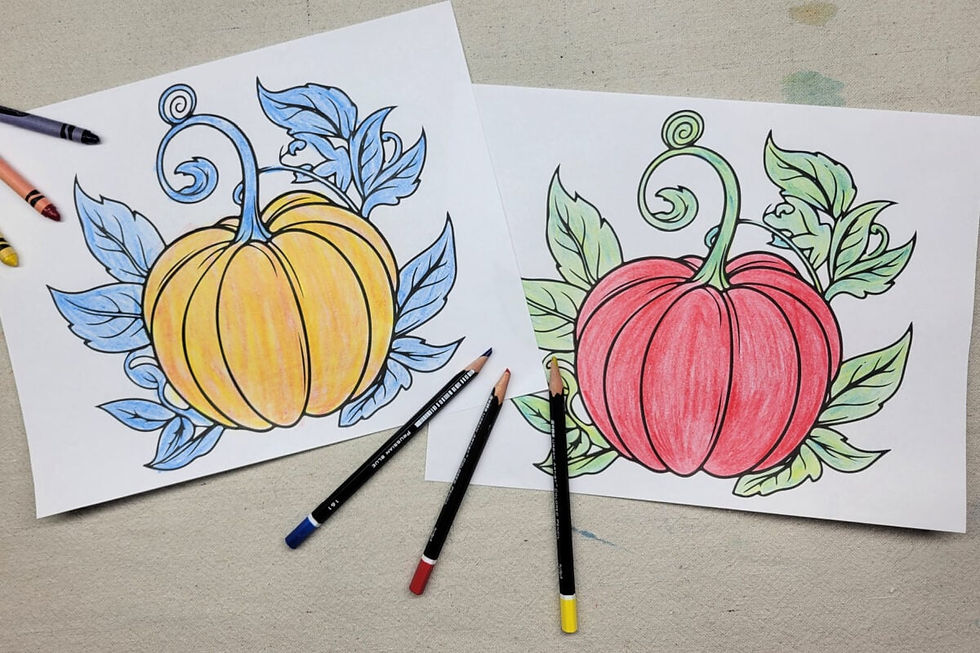
From my own experiment with the materials, I think that learning about the basic of color theory, like which colors go well with each other would be a perfect exercise for the younger kids, embedding into them a natural feel for colors by observation. Perhaps a great idea would be for them to practice coloring in the color wheel, and then apply said knowledge by choosing a color palette for their drawings while not straying too far from it.

For middle school to high school, I think that basic color theory is not quite enough, and that they should be taught how many different color relationships can be balanced on the page. A practice of adding more color to their palette is needed. I can think of an exercise where they draw up a piece and having to write a supporting short paragraph to explain why they chose said color using the color theory lecture I would have given in class. Also, blending technique will be expected of them, not just a direct application of certain hues on paper.

Reading Incorporated Idea:
(pg42) "It is helpful for students to hear artists talk about this aspect of studio work, to understand that control of the medium need not always be a primary concern." I agree with this idea a lot, thus I want the students to "play" with the color, rubbing and smearing them with a cotton swap or their fingers, they can also add water for the unexpected aspect of color mixing.
(pg42) "Change the scale of your explorations by experimenting with working large, and vary your usual distance from the drawing surface by using extenders." For most of my future lessons, I will always encourage students to use the view finder, or planning their piece out. Thought I do believe that with color, there comes an opportunity for bigger scale planning, since a lot of the time, many different combinations of color do create excellent gradients for the whole piece.
(pg 48) "Pressed crayons are more like oil pastels in that the colors go on bold and saturated and with less flaking than molded crayons." I like this idea and learned a lot about how different crayons can create a more blended color versus bold and stiff mark making. I would love to instruct students on how controlling color edges can certainly help with compositing and emphasizing subject matters on a page.


Comments